Desserts
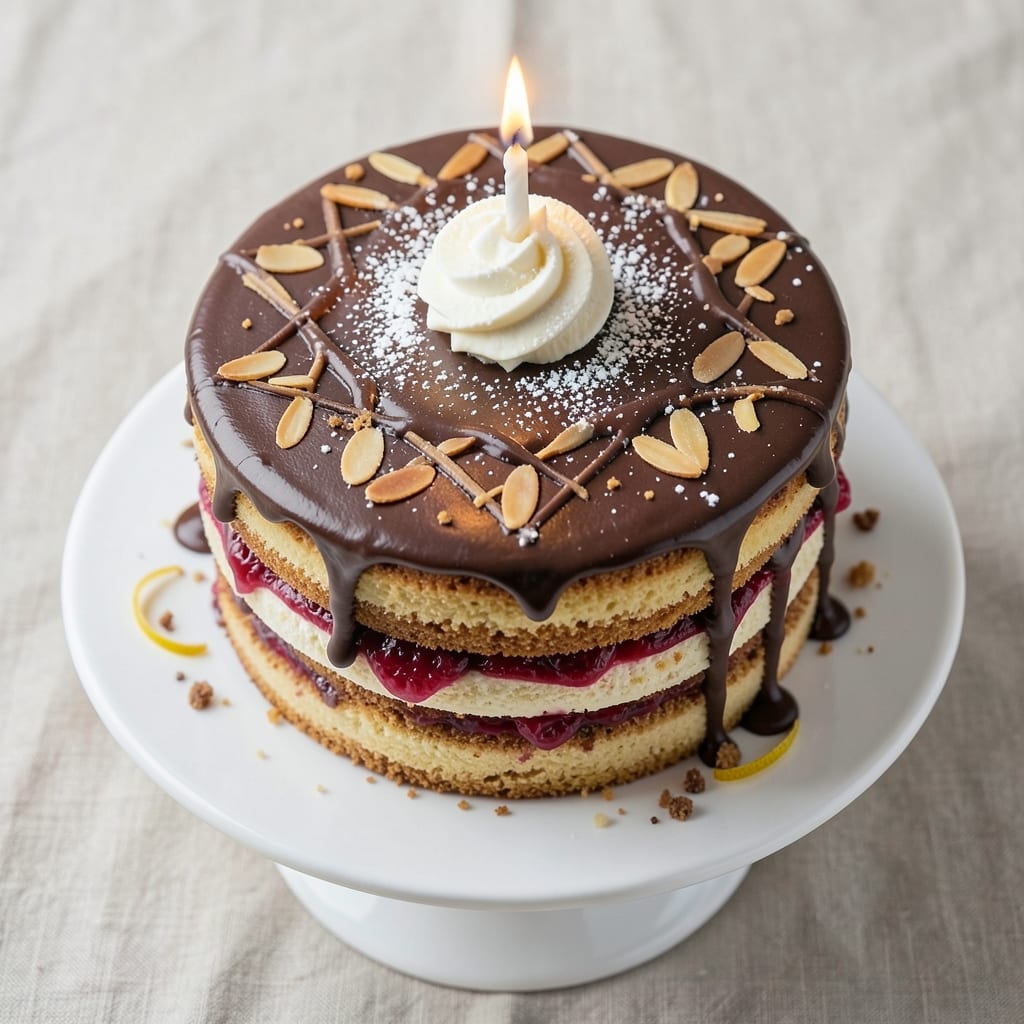
This American birthday cake recipe delivers the classic combination of tender layers and velvety buttercream that's been a birthday staple for generations. The secret lies in precise measurements and gentle folding—no dense crumbs or dry texture here. I've baked countless versions, and this method consistently produces a cake that's light yet sturdy enough to hold multiple layers of frosting without collapsing.
What makes this recipe truly special is the balance of ingredients: cake flour for tender crumbs, buttermilk for moisture, and a touch of baking powder for lift. The vanilla bean extract adds depth that store-bought extracts can't match, while the buttercream—made with real butter—creates that signature American sweetness that's both rich and smooth. Every element works together to create a cake that's perfect for cutting, serving, and celebrating.
The result is a moist cake with perfectly even layers that hold their shape, topped with a perfect swirl of vanilla buttercream that's neither too sweet nor too heavy. The frosting is thick enough to pipe beautifully but light enough to spread smoothly, creating that iconic birthday cake look. This isn't just a cake—it's a celebration in every bite, designed to be the centerpiece of any birthday party.
Whether you're baking for a child's first birthday or an adult celebration, this recipe scales beautifully and includes tips for decorating with fondant, sprinkles, or fresh flowers. The instructions are clear enough for beginners but precise enough for experienced bakers to achieve professional results. Let's get started on creating a birthday cake that will be remembered for years to come.
Ingredients for american birthday cake
Precision-measured ingredients for a flawlessly moist American birthday cake with professional-quality buttercream.
| Ingredient | Amount | Notes |
|---|---|---|
| All-Purpose Flour 🌾 | 3 cups | Sifted for even texture |
| Cake Flour 🌾 | 1 ½ cups | For ultra-tender crumbs |
| Unsalted Butter 🧈 | 2 cups | Room temperature, European preferred |
| Granulated Sugar 🍚 | 2 cups | Superfine for smooth batter |
| Vanilla Bean Extract 🌿 | 2 tsp | Real vanilla bean preferred |
| Buttermilk 🥛 | 1 ½ cups | Fresh, not powdered |
| Large Eggs 🥚 | 4 whole | Room temperature, separated |
| Baking Powder 🧂 | 2 tsp | Aluminum-free for stability |
| Salt 🧂 | ½ tsp | Fine sea salt preferred |
| Vanilla Buttercream Frosting 🍰 | 3 cups | Homemade recipe included |
| Powdered Sugar 🍚 | 3 cups | Sifted for smooth frosting |
| Heavy Cream 🥛 | 1 cup | Whipped for buttercream |
| Vanilla Extract 🌿 | 1 tbsp | Pure vanilla extract |
| Lemon Juice 🍋 | 1 tsp | Freshly squeezed |
The cake flour and buttermilk are non-negotiable for that signature American tenderness. Bob's Red Mill cake flour is my go-to for consistent results, but any reputable brand works—just sift it thoroughly. European-style unsalted butter (like Plugrá) has higher fat content, which translates to richer flavor and better texture. For the vanilla bean extract, Madagascar bourbon vanilla adds depth that imitation extracts can't replicate. Room-temperature eggs and butter are critical—they emulsify better, ensuring no greasy spots in your batter. If you're in a pinch, let your eggs sit in warm water for 10 minutes to bring them to room temperature.
No cake flour? Substitute 1.5 cups all-purpose flour minus 2 tbsp—the extra sifting makes a difference. Buttercream missing its zip? Add 1 tbsp corn syrup or lemon juice to stabilize it. For the frosting, powdered sugar quality matters—Domino brand is finely sifted and dissolves smoothly. If you're decorating with fondant or fresh flowers, use gel food coloring instead of liquid to avoid moisture issues. The lemon juice in the buttercream isn't just for flavor—it prevents graininess in the sugar. And if your buttercream curdles? Don't panic—just beat in 1 tbsp cold water to re-emulsify it.
Store cake layers wrapped in plastic at room temperature for 2 days or in the fridge for 5 days—bring to room temp before frosting. Buttercream can be refrigerated for 3 days or frozen for 1 month, but thaw gently in the fridge. For large gatherings, bake layers 1 day ahead—flavors meld beautifully. To keep your cake fresh longer, place it in a cool, dark spot away from direct sunlight. And if you're making this for a child's party, assemble the cake 4 hours ahead—it holds its shape perfectly while giving you time to focus on decorations.
Why You'll Love This Recipe
- No Mixer Needed: I swear by this recipe when I’m in a rush—just cream butter and sugar by hand, then fold in the flours. The cake turns out light and tender without needing to bust out the stand mixer, and honestly? That butter-cream combo is foolproof.
- Vanilla Kiss Magic: That real vanilla bean extract makes all the difference—it’s not just vanilla, it’s warm vanilla. The flavor is rich but not overpowering, and the buttery layers? Pure comfort in every bite.
- Double-Duty Cake: This recipe works for birthdays and potlucks. Bake it in a 9x13 pan for a crowd, or two 8-inch rounds for a special occasion. The cake flour keeps it soft, so it’s just as good the next day (if it lasts that long).
- Budget-Friendly Luxury: Butter and sugar make it feel fancy, but the ingredients are simple and affordable. I can feed a dozen people for under $20, and the leftovers? Perfect for quick breakfast sandwiches or French toast. Win-win.
Step-by-step instructions for vanilla buttercream birthday cake
Here's how to achieve that signature American birthday cake texture—light layers, tender crumb, and flawless moisture.
Prepare the Cake Batter for Optimal Texture
In a large mixing bowl, whisk together the 3 cups All-Purpose Flour, 1.5 cups Cake Flour, 2 tsp Baking Powder, and 0.5 tsp Salt. Sift the dry ingredients directly into the bowl to eliminate any lumps that could create dense pockets in your cake. Set this mixture aside.
In a separate stand mixer fitted with the paddle attachment, cream the 2 cups Unsalted Butter and 2 cups Granulated Sugar on medium speed for 4-5 minutes until light and fluffy. This step incorporates air, which is critical for that signature American birthday cake rise. Scrape down the sides of the bowl with a spatula to ensure even mixing.
Add the 4 whole Large Eggs, one at a time, mixing well after each addition. Then stir in the 2 tsp Vanilla Bean Extract and 1 tbsp Vanilla Extract for deep flavor. With the mixer running on low speed, gradually add the dry ingredients to the wet, mixing just until combined. Avoid overmixing—stop as soon as the flour is incorporated to maintain a tender crumb.
Finally, gently fold in the 1.5 cups Buttermilk and 1 tsp Lemon Juice using a spatula. The lemon juice brightens the flavor and helps balance the richness of the butter. The batter should be smooth and slightly thick—if it appears too thin, let it rest for 10 minutes before proceeding.
Bake Three Perfect Layers
Preheat your oven to 350°F and grease three 8-inch round cake pans with butter or baking spray, then line the bottoms with parchment paper. Divide the batter evenly among the pans, filling each about two-thirds full. Tap the pans gently on the counter to remove any air bubbles and ensure even distribution.
Bake for 25-30 minutes, or until a toothpick inserted into the center comes out clean. Rotate the pans halfway through baking for even browning. The cakes should be golden on top but not overbaked—overcooking leads to dryness, which defeats the purpose of this moist cake.
Remove the cakes from the oven and let them cool in their pans for 10 minutes. Then transfer them to a wire rack to cool completely. This gradual cooling prevents cracking and ensures the layers hold their shape when assembling.
Prepare the Vanilla Buttercream Frosting
In a stand mixer fitted with the whisk attachment, beat the 1 cup Heavy Cream until soft peaks form. In a separate bowl, combine the 3 cups Powdered Sugar and 1 tbsp Vanilla Extract. Gradually add the powdered sugar mixture to the whipped cream while mixing on low speed.
Increase the speed to medium and beat for 3-5 minutes until the frosting is smooth, fluffy, and holds its shape when piped. This buttercream should be thick enough to hold peaks but still spreadable—if it's too soft, chill it for 15 minutes before using. The frosting is the star of this cake, so take your time to achieve the perfect consistency.
Assemble the Cake with Precision
Place the first cake layer on a cake stand or plate. Spread a thin layer of frosting (about ¼ cup) over the top to create a "crust" that prevents the filling from seeping through. Repeat this step with the remaining two layers, stacking them with the frosting spread evenly between each.
Once all layers are stacked, apply a thicker layer of frosting (about 1 inch) to the sides and top of the cake. Use an offset spatula to smooth the frosting evenly, creating clean, sharp edges. For a classic American birthday cake look, create a slight dome shape by building up the frosting in the center and smoothing it outward.
Chill the cake in the refrigerator for 30 minutes before serving. This helps the frosting set and makes slicing cleaner. The result should be a cake with perfectly moist layers, a tender crumb, and a velvety buttercream finish that’s pure American birthday cake perfection.
Pro Tips For Making American Birthday Cake
- STOP OVERMIXING THE BATTER: I learned this the hard way—after three lumpy cakes, I realized the moment you add the wet ingredients to the dry, mix just until combined. Cake flour is delicate, and overworking it turns your tender crumb into a dense brick. Stop when there are a few dry spots left; they’ll disappear when baked.
- WEIGH YOUR FLOUR—NO EXCUSES: Scooping flour from the bag is a recipe for disaster, especially with cake flour’s lightness. Use a kitchen scale for precision—this isn’t the time to eyeball. A cup of cake flour can vary by 10-15 grams depending on how you pack it, and that throws off the whole texture.
- LET THE BUTTER SOFTEN FULLY: Cold butter makes for a tough cake, and I used to rush this step because I was impatient. Take the butter out of the fridge at least 2 hours before baking—or overnight if you’re planning ahead. Press it between two sheets of parchment if it’s still too firm; it’ll soften faster and cream smoother.
- SCORE THE CAKE BEFORE FROSTING: This isn’t just for show—it’s insurance. After baking, let the cake cool completely, then slice it into layers with a serrated knife. The cuts help the frosting spread evenly and prevent cracks when you stack it. (Yes, even if you’re frosting the same day, wait at least 30 minutes.)
Regional styles of this recipe
Classic Southern Style
In the South, birthday cakes often feature a richer, denser crumb achieved by adding ½ cup sour cream to the batter, replacing some of the buttermilk. I swap 1 cup of the all-purpose flour for cornmeal (about ¼ cup) to enhance that traditional Southern texture. Top with homemade vanilla glaze—mix 1 cup powdered sugar with 2 tbsp heavy cream and 1 tsp vanilla extract—for a glossy finish that’s a regional staple. 🍰
Midwest Fondant Tradition
The Midwest takes pride in bold, symmetrical designs with fondant. After baking the layers, I cover them completely in white buttercream, then add a smooth fondant layer (use 1 lb store-bought fondant or homemade from 3 cups powdered sugar + 1 cup marshmallow fluff + ¼ cup shortening). Midwest bakers often incorporate sugar flowers or hand-piped borders with a Wilton 1M tip for intricate details. Chill the cake for 1 hour before decorating to prevent melting. ✨
East Coast Vanilla Bean Focus
East Coast bakers prioritize authentic vanilla flavor, using double the vanilla bean extract (up to 4 tsp) and scraping the seeds from 2 vanilla beans directly into the batter. For frosting, I replace ½ cup of the powdered sugar with finely ground vanilla bean sugar (pulse 1 vanilla bean + ½ cup sugar in a food processor). Serve with whipped cream and fresh berries—a nod to New England’s love of simple, elegant desserts. 🌿
West Coast Modern Twist
Out West, birthday cakes often blend tradition with creativity. I add 1 tsp matcha powder to the batter for a subtle earthy note, then top with white chocolate ganache (melt 8 oz white chocolate + ½ cup heavy cream) and edible gold leaf. For a fun touch, sprinkle crushed freeze-dried strawberries on top—they add a playful crunch without overpowering the vanilla. This style is perfect for adult celebrations or themed parties. 💛
Texas-Style Funfetti
Texas bakers love Funfetti cakes, so I fold ½ cup rainbow sprinkles into the batter after mixing in the buttermilk. For extra flair, I use Wilton 104 piping tip to create swirls of buttercream on top before adding sprinkles. Serve with Texas-style sweet tea for dipping—it’s a regional favorite that pairs beautifully with the cake’s sweetness. 🌶️
New England Spiced Variation
In New England, birthday cakes often feature warm spices for a cozy twist. I add 1 tsp cinnamon and ½ tsp nutmeg to the dry ingredients, then top with caramel buttercream (mix 2 cups buttercream + ½ cup caramel sauce). Garnish with toasted pecans and a drizzle of bourbon caramel for a sophisticated finish. This version is ideal for fall or winter birthdays. 🍂
Nutrition facts
Frequently asked questions
Can I make this cake in a different shape (like square or sheet cake) instead of round layers?
For a sheet cake, bake in a 9x13-inch pan at 350°F for 25-30 minutes until a toothpick comes out clean. For a square cake, use a 9x9-inch pan and reduce baking time to 20-25 minutes. Adjust frosting quantity accordingly—about 1.5 cups for a sheet cake and 1 cup for a square. The batter recipe remains the same, but check for doneness 5 minutes early since smaller pans bake faster.
How do I prevent my cake from cracking between layers?
Cracking usually happens when layers aren't level or frosting isn't applied properly. First, use a serrated knife to trim the domed tops of cooled layers for even surfaces. Then, spread a thin "crumb coat" of frosting (¼ cup) on each layer before stacking. Chill the cake for 30 minutes between layers to help the frosting set. Finally, avoid overfilling with frosting—1 inch is ideal for stability.
What's the best way to store a fully assembled birthday cake?
For short-term storage (2 days), cover tightly with plastic wrap and keep at room temperature. For longer storage (5 days), refrigerate the entire cake (including decorations). Bring to room temperature before serving. Never freeze a fully decorated cake—frosting and fondant will melt. Instead, freeze individual layers wrapped in plastic for up to 3 months, then assemble with fresh frosting after thawing.
Can I substitute cake flour if I don't have any?
Yes! For every 1 cup of cake flour needed, mix 1 cup all-purpose flour minus 2 tablespoons. Sift this blend thoroughly to mimic cake flour's fine texture. The extra sifting removes gluten proteins, which prevents a tough crumb. For best results, use this substitution in the 1.5 cups of cake flour called for in the recipe. If you can't sift, use 1 cup all-purpose flour + 2 tablespoons cornstarch instead.
How do I make this cake gluten-free?
Replace all-purpose flour with a 1:1 gluten-free baking flour blend (like Bob's Red Mill or King Arthur). For cake flour, use ¾ cup gluten-free all-purpose flour + ¼ cup cornstarch per 1 cup needed. Add ½ teaspoon xanthan gum to the dry ingredients to improve structure. Note: Gluten-free cakes may be slightly denser. Bake at 325°F instead of 350°F and check doneness at 20 minutes—they bake faster. Chill layers longer before frosting.