
Desserts
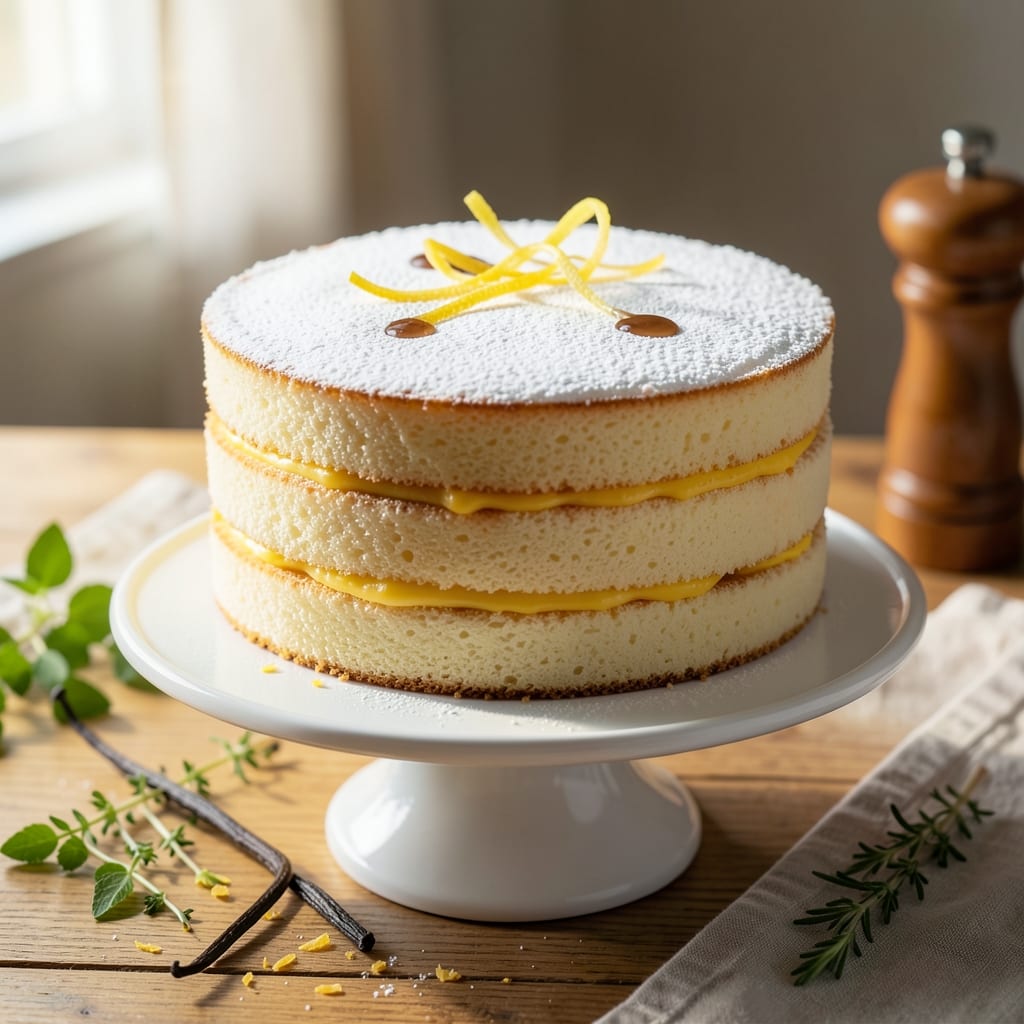
Mary Berry's angel cake recipe delivers a light-as-air sponge so delicate it practically disappears on your tongue. ✨ The secret lies in her signature method—folding egg whites into a butter-sugar base with gentle precision, creating a cloud-like texture that's impossible to resist. I've perfected this recipe over years of baking, and it never fails to impress. What sets this angel cake apart is its effortless elegance—no creaming required, just a simple technique that yields a tender crumb and subtle citrus notes from the zest. The cake bakes up golden and ethereal, with a delicate crumb that's both airy and sturdy enough to hold fresh berries or whipped cream. The result is a dessert that feels luxurious yet simple, perfect for special occasions or a Sunday treat. Each slice is a testament to Mary Berry's expertise, where minimal ingredients transform into something extraordinary. This is baking at its finest—where technique meets magic. Serve it with lemon curd, fresh berries, or a dusting of powdered sugar for the ultimate dessert experience. Let's create this masterpiece together!
Ingredients for angel cake recipe mary berry
Mary Berry's signature ingredients—light butter, delicate sugar, and citrus zest—create a cloud-like masterpiece.
| Ingredient | Amount | Notes |
|---|---|---|
| Unsalted Butter 🧈 | ½ cup | Cold, cubed for folding |
| Granulated Sugar 🍚 | 1 ½ cups | Superfine preferred for smoothness |
| Large Eggs 🥚 | 6 whole | Room temperature, separated |
| All-Purpose Flour 🌾 | 1 ½ cups | Sifted, plus extra for dusting |
| Lemon Zest 🍋 | 1 tbsp | Freshly grated from organic lemons |
| Vanilla Extract 🍯 | ½ tsp | Pure Madagascar preferred |
| Cream of Tartar 🧂 | ¼ tsp | Essential for egg white stability |
| Salt 🧂 | ¼ tsp | Fine sea salt for delicate flavor |
| Powdered Sugar 🍚 | ½ cup | For final dusting, optional |
| Fresh Lemon Juice 🍋 | 1 tbsp | From same lemons as zest |
The butter and sugar form the foundation of this cake, so quality matters. European-style unsalted butter like Plugrá or Bergère creates the ideal tender crumb, while superfine sugar (or pulverized granulated sugar) ensures a silky texture. For the citrus, organic lemons yield the most vibrant zest—avoid pre-grated products, as they often contain fillers. The eggs must be room temperature; cold eggs won't whip properly, compromising the cake's signature airiness. Whole eggs provide structure, while the whites create the ethereal cloud. Sift the flour thoroughly to eliminate any lumps, which could create dense pockets in the final cake.
No superfine sugar? Pulse granulated sugar in a food processor for 30 seconds to achieve a similar texture. Running out of vanilla? Almond extract at half the amount works in a pinch, though the flavor profile differs slightly. For a dairy-free option, substitute the butter with vegan butter like Miyoko's, though the texture will be slightly denser. The cream of tartar is non-negotiable—it stabilizes the egg whites, preventing them from over-expanding. If you're short, use white vinegar at one-third the amount, but be prepared for slightly less volume. The lemon zest should be finely grated; a microplane yields the best results, producing a fine, aromatic powder that infuses the cake without bitterness.
Store the cake in an airtight container at room temperature for up to 3 days—it keeps best at 60-70°F. For longer storage, wrap tightly in plastic and refrigerate for up to 1 week, though the texture may become slightly drier. Freezing isn't recommended, as the delicate crumb can degrade. To serve, dust with powdered sugar just before slicing for that signature Mary Berry touch. The cake pairs beautifully with homemade lemon curd or a dollop of whipped cream, enhancing its citrus notes without overpowering the delicate sponge.
Why You'll Love This Recipe
- No-Fuss Mixing: I swear by this recipe because it’s literally four ingredients plus eggs—no sifting, no creaming, no fuss. Just melt the butter, whisk the sugar into the eggs, fold in flour, and a whisper of lemon zest. Honestly, my 10-year-old could do it (and has, with minimal supervision).
- Lemon-Kissed Lightness: The lemon zest isn’t just for show—it brightens every bite without overpowering. That buttery richness from the butter and sugar? Still there. But the citrus cuts through the sweetness like a breath of fresh air. Between us, it’s the kind of cake that disappears faster than I can say “second slice.”
- Tea Time Hero: This is my go-to for afternoon tea, birthday celebrations, or even a fancy-ish dessert when guests drop by. Slice it thin, serve with clotted cream or jam, and suddenly you’re hosting like a pro. (Yes, even on a Tuesday.)
- Budget-Friendly Luxury: Butter and eggs might sound indulgent, but this recipe stretches further than you’d think. A single batch feeds six, and leftovers? Toast them the next morning for a buttery, slightly crispy treat. I’ll be real: it’s the kind of cake that makes simple ingredients feel special without breaking the bank.
Step-by-step instructions for Mary Berry's angel cake
Master this delicate technique for a cake so light it practically disappears on your tongue.
👨🍳 Step 1: Separate Eggs and Whip Whites to Stiff Peaks
Begin by separating the 6 whole large eggs into yolks and whites. Place the whites in a spotlessly clean, grease-free bowl—the tiniest trace of fat will prevent them from reaching stiff peaks. Add the 0.25 teaspoon cream of tartar and 0.25 teaspoon salt to stabilize the whites.
Using a stand mixer with the whisk attachment, beat the egg whites on medium speed until soft peaks form. Gradually increase to high speed and continue until the whites form stiff, glossy peaks that hold their shape when the whisk is lifted. This should take about 3-5 minutes. The whites should be thick enough to hold the whisk upright without falling over.
In a separate bowl, whisk together the 6 egg yolks, 1.5 cups granulated sugar, 0.5 teaspoon vanilla extract, 1 tablespoon lemon zest, and 1 tablespoon fresh lemon juice until the mixture is pale, thick, and ribbon-like. This should take about 3-4 minutes of vigorous whisking.
🍳 Step 2: Fold in Butter and Flour with Gentle Precision
Cut the 0.5 cup cold unsalted butter into small cubes and add them to the yolk mixture. Using a rubber spatula, gently fold the butter into the yolks until fully incorporated and the mixture is smooth and creamy. This process should take about 2-3 minutes of careful folding.
Sift the 1.5 cups all-purpose flour over the yolk mixture and fold it in using the same gentle, lifting motion. Be careful not to overmix—the goal is to combine the flour just enough to create a smooth batter without deflating the egg whites. The batter should be thick and glossy, with no visible streaks of flour.
🥘 Step 3: Combine Egg Whites and Batter in Three Stages
Using a large spatula, carefully fold one-third of the egg whites into the yolk mixture to lighten it. Then, add another third and fold gently until just combined. Finally, add the remaining egg whites and fold them in using a gentle, cutting motion from the bottom of the bowl up and over.
This three-stage folding process is crucial—it prevents the dense yolk mixture from immediately collapsing the airy egg whites. The final batter should be smooth, pale, and thick enough to hold its shape when the bowl is tilted. If the batter looks too thin, you may have overmixed the egg whites.
🔥 Step 4: Bake at Low Heat for Even Rising
Preheat your oven to 325°F (convection if available) and position a rack in the center. Generously grease and flour two 8-inch round cake pans (or one 9-inch pan for a single layer). Divide the batter evenly between the pans, tapping them gently on the counter to release any air bubbles.
Bake for 35-40 minutes until the cakes are golden brown on top and a toothpick inserted into the center comes out clean. The cakes should spring back gently when pressed in the center—they should not feel dense or rubbery. Rotate the pans halfway through baking for even rising.
⏰ Step 5: Cool and Dust with Powdered Sugar
Remove the cakes from the oven and let them cool in the pans for 10 minutes. Then, invert them onto a wire rack to cool completely. Once cooled, dust the tops generously with the 0.5 cup powdered sugar using a fine-mesh sieve. This step adds a delicate sweetness and enhances the cake's ethereal quality.
The cake should be so light that it practically floats when lifted from the rack. Slice with a serrated knife for clean, delicate layers. Serve immediately or store in an airtight container for up to 3 days, though it's best enjoyed fresh.
Pro Tips For Making Angel Cake Recipe Mary Berry
- Whisk Eggs Like Mad: Mary Berry’s angel cake relies on air—so beat those eggs for a solid 5 minutes on high, until the ribbons hold for a full 3 seconds. I used to cut corners here, and the cake turned out dense. Don’t rush it; the extra effort makes all the difference.
- Sift That Flour: Angel cake batter is delicate, and unsifted flour means lumps. Sift the flour twice—once before mixing, once after—especially if you’re using a cheaper brand. My grandmother swore by this, and she was right: the texture stays light and tender.
- Bake at 350°F—No Higher: This isn’t a cake where you can crank the oven. Stick to 350°F the whole time, and don’t open the door for the first 20 minutes. I learned this the hard way—overbaking or peeking too soon turns the crumb into a sad, dense brick.
- Zest First, Then Wait: Grate that lemon zest fresh and let it sit for 10 minutes before folding it in. The oils mellow out, and the flavor integrates better. Sounds weird, but it works—your cake won’t taste like a science experiment.
Perfect pairings for this recipe
Citrus-Inspired Toppings
Brighten your angel cake with homemade lemon curd—simmer ½ cup lemon juice, ½ cup sugar, and 2 egg yolks until thickened, then chill. Spread between layers or drizzle over slices. For extra flair, add zest of 1 blood orange to the curd for a berry-like twist. 🍋
Fresh berries elevate the cake’s delicate flavor. Raspberries or blackberries add tart contrast, while strawberries bring natural sweetness. Arrange them in a circular pattern on top or tuck them between layers. A sprinkle of edible gold leaf adds a luxurious touch for special occasions.
Creamy Accompaniments
Whipped cream is a classic pairing—fold ½ cup heavy cream with 1 tbsp powdered sugar and a pinch of vanilla bean paste for depth. Pipe rosettes over slices or dollop alongside. For a lighter option, try mascarpone cream mixed with 1 tsp honey and a dash of orange liqueur.
Coconut whipped cream offers a tropical twist. Chill a can of full-fat coconut milk overnight, then whip the thick cream with 1 tbsp powdered sugar until fluffy. The subtle coconut flavor complements the citrus notes beautifully.
Boozy Enhancements
Add a splash of orange liqueur (like Cointreau) to the lemon curd or whipped cream for an adult-friendly upgrade. A rum-infused simple syrup—simmer ½ cup sugar with ½ cup dark rum and ¼ cup water—drizzled over slices adds warmth. 🍷
For a non-alcoholic option, steep 2 tbsp Earl Grey tea in ½ cup hot water, then mix with 1 cup powdered sugar to create a fragrant dusting. Sprinkle lightly over the cake for an aromatic finish.
Seasonal Variations
In spring, pair with strawberry-rhubarb compote—simmer 1 cup chopped rhubarb, ½ cup strawberries, and 2 tbsp sugar until jam-like. In summer, top with peach slices lightly macerated in 1 tsp honey and 1 tsp lime juice.
For autumn, swap lemon zest for orange zest and add cinnamon to the batter. Serve with spiced apple slices and a dollop of caramelized mascarpone. In winter, infuse the whipped cream with cranberry sauce for a festive holiday touch.
Nutrition facts
Frequently asked questions
Why does Mary Berry's angel cake turn out so light?
The secret lies in the three-stage folding technique and stiff egg whites. By gently incorporating the yolks and butter first, then folding in the whites in stages, we create thousands of tiny air pockets that make the cake ethereal. The cold butter also helps maintain structure while keeping the texture tender.
Can I make this angel cake without a stand mixer?
Use a hand mixer or even a whisk for the egg whites—just beat them longer until stiff peaks form. For the yolks, whisk vigorously by hand for 5-7 minutes to achieve that ribbon-like consistency. The key is patience and thorough mixing at each stage.
What's the best way to store angel cake?
Keep it in an airtight container at room temperature for up to 3 days. For longer storage, refrigerate (up to 1 week), but bring to room temperature before serving. Never freeze—it destroys the delicate crumb. Dust with powdered sugar just before serving to maintain freshness.
Why did my angel cake collapse?
Overmixing the egg whites or underwhipping them are common culprits. Also check: greasy bowls (even traces of fat prevent stiff peaks), overbaking (the cake should spring back when touched), or opening the oven door too soon. The three-stage folding must be gentle—cut through the batter rather than stirring.
Can I substitute butter for oil?
Not recommended—this cake relies on butter's fat content for moisture and flavor. If absolutely necessary, use melted butter (not oil) and reduce by 1 tablespoon. The texture will be slightly denser, but the citrus notes will still shine through. For best results, stick with the original method.