
Desserts
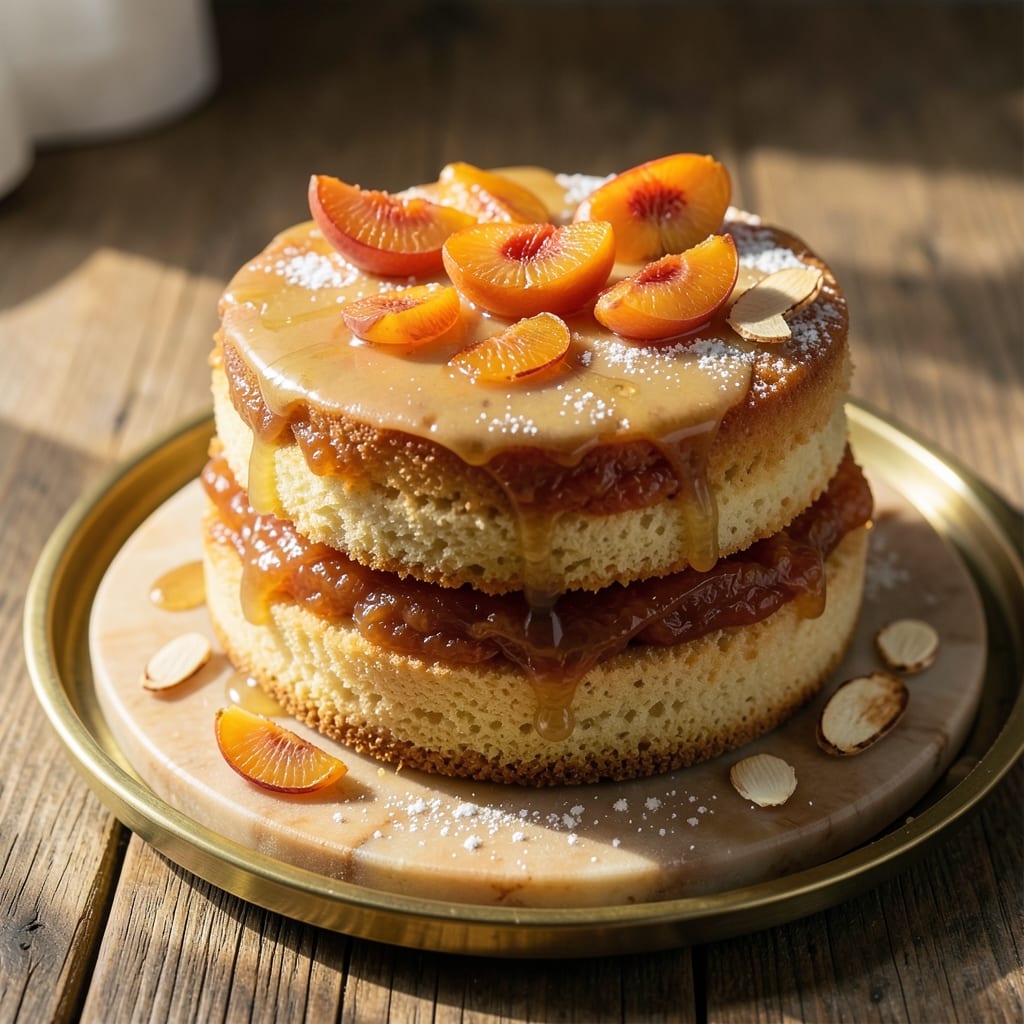
This apricot tea cake recipe delivers the perfect balance of buttery layers and jammy apricot filling that tastes like a cozy afternoon tea. 💛 The secret lies in infusing the cake batter with tea for that signature moist texture, while the apricot jam filling adds bursts of fruity sweetness between each tender layer. I've perfected this recipe over years of baking, ensuring it's approachable yet impressive enough for special occasions.
The cake itself is made with a simple yet rich batter that combines all-purpose flour, butter, and tea for that classic flavor profile. The apricot filling, whether made from fresh fruit or high-quality jam, creates a luscious center that keeps the cake moist and delicious. Baking it in layers ensures each bite delivers that perfect combination of cake and filling.
What makes this apricot tea cake truly special is its versatility. You can adapt it to suit dietary preferences, such as using gluten-free flour or vegan butter, without sacrificing flavor. The result is a cake that's tender, fragrant, and just sweet enough to satisfy any tea-time craving.
Once baked, the cake develops a golden, slightly crisp top that contrasts beautifully with the soft layers beneath. Serve it warm with a cup of tea for the full experience, or enjoy it at room temperature for a delightful treat. Here's how to bring this classic dessert to life in your own kitchen.
Ingredients for apricot tea cake
Buttery layers, fruity filling, and tea-infused moisture—just 12 ingredients for perfect afternoon tea.
| Ingredient | Amount | Notes |
|---|---|---|
| All-Purpose Flour 🌾 | 2 ½ cups | Sifted for light texture |
| Unsalted Butter 🧈 | 1 cup | Softened to room temperature |
| Granulated Sugar 🍚 | 1 ½ cups | White or light brown |
| Large Eggs 🥚 | 3 whole | Room temperature preferred |
| Milk 🥛 | 1 cup | Whole milk for richness |
| Black Tea Bags ☕ | 3 whole | Earl Grey or English Breakfast |
| Baking Powder 🧪 | 2 tsp | Aluminum-free preferred |
| Salt 🧂 | ½ tsp | Fine sea salt |
| Vanilla Extract 🌸 | 1 tsp | Pure vanilla preferred |
| Apricot Jam 🍑 | 1 ½ cups | High-quality, seedless |
| Powdered Sugar 🍚 | ½ cup | For dusting layers |
| Apricot Preserves 🍑 | ½ cup | Optional for extra filling |
The butter and flour are your foundation here. European-style butter (like Plugrá) gives richer flavor, but any good-quality brand works. For the flour, King Arthur or Bob's Red Mill are my go-tos—they bake up lighter. The tea matters too: Earl Grey or English Breakfast bags steeped in 1 cup hot water for 5 minutes, then cooled. Strain out the leaves before adding to the batter. Skip the tea? Your cake will still be delicious, but that signature moist texture will be missing. The jam should be high-quality, seedless apricot jam—Bon Appétit or Smucker's are reliable choices.
No vanilla extract? Vanilla bean paste works just as well, or scrape seeds from a vanilla bean. Short on apricot jam? Peach or plum jam adds a nice variation, though apricot's floral notes are ideal here. The powdered sugar is just for dusting between layers—don't skip it, but don't stress over the brand. For a gluten-free version, swap the all-purpose flour for a 1:1 gluten-free baking flour (like Bob's Red Mill). The eggs should be at room temperature for even baking, but if you're in a rush, just let them sit out for 10 minutes before mixing. The milk can be any kind—whole gives the richest texture, but 2% works fine too.
This cake keeps beautifully for 3 days at room temperature, covered loosely with plastic wrap. For longer storage, wrap tightly and refrigerate for up to 1 week. The filling stays fresh for 5 days in the fridge too. I always make a double batch—one for immediate serving and one to freeze. Slice and wrap individual portions in plastic wrap, then freeze for up to 3 months. Thaw at room temperature before serving. The cake reheats wonderfully—just warm slices in the oven at 300°F for 5 minutes to bring back that fresh-from-the-oven warmth.
Why You'll Love This Recipe
- No Fuss Mixing: I swear by this recipe—just cream butter and sugar, crack eggs, fold in flour. No sifting, no measuring cups over and over. The dough comes together smoother than my morning coffee.
- Tea Cake Magic: That buttery crumb with tender layers of jam-soaked apricot? It’s the kind of cake that disappears in minutes. The sugar caramelizes just enough to give it a subtle depth, like a warm hug in dessert form.
- Brunch or Snack: Serve it sliced with tea for a proper afternoon treat, or pack individual portions for a picnic. Honestly, I’ve even reheated leftover slices in the toaster—crispy edges, gooey center, no judgment.
Step-by-step instructions for apricot tea cake
Here's how to create luscious layers of buttery tea cake with apricot jam filling.
👨🍳 Step 1: Infuse the Milk with Tea Flavor
Place the 3 whole black tea bags in a heatproof bowl and pour the 1 cup milk over them. Let it steep for 5 minutes until the milk turns a pale golden color and smells fragrant. Remove and discard the tea bags - we only want the flavor, not the leaves.
While the milk steeps, let the 1 cup unsalted butter soften to room temperature by placing it in a bowl set over warm (not hot) water for 5-10 minutes. You'll know it's ready when it leaves a slight indentation when pressed with your finger. This creates the perfect creamy texture for our cake layers.
🍳 Step 2: Whip the Butter and Sugar Mixture
In a large mixing bowl, beat the softened butter and 1.5 cups granulated sugar together on medium speed using an electric mixer until light and fluffy, about 3-4 minutes. You'll see the mixture nearly double in volume and become pale in color. This step is crucial for creating that tender, melt-in-your-mouth texture.
Add the 3 whole large eggs, one at a time, mixing well after each addition. Then stir in the 1 tsp vanilla extract and the tea-infused milk. Mix until just combined - don't overmix or the cake will become dense. The batter should be smooth and slightly thick, like heavy cream.
👨🍳 Step 3: Combine Dry Ingredients and Create Layers
In a separate bowl, whisk together the 2.5 cups all-purpose flour (be sure to sift it first for a light texture), 2 tsp baking powder, and 0.5 tsp salt. Gradually add this dry mixture to the wet ingredients, mixing on low speed just until combined. The batter will be thick and slightly sticky - this is perfect for our layered cake.
Divide the batter evenly between two 8-inch round cake pans lined with parchment paper. For the filling, mix together the 1.5 cups apricot jam and 0.5 cup apricot preserves until smooth. Spread half of this mixture evenly over the bottom layer of batter in one pan.
🔥 Step 4: Bake the Layers to Golden Perfection
Preheat your oven to 350°F. Bake the bottom layer (without filling) for 18-20 minutes or until a toothpick inserted in the center comes out clean. Let it cool in the pan for 5 minutes before removing it to a wire rack. Repeat with the top layer, baking it for the same 18-20 minutes.
While the top layer bakes, prepare the filling by mixing the remaining jam mixture with the 0.5 cup powdered sugar until smooth. Once both layers are baked and completely cooled, spread this filling evenly over the top layer. The cake should have a beautiful golden brown color with slightly domed tops.
🥘 Step 5: Assemble and Dust with Powdered Sugar
Carefully place the top layer onto the bottom layer, pressing gently to create a perfect sandwich. Dust the entire cake generously with the remaining 0.5 cup powdered sugar using a fine-mesh sieve. This creates that signature dusting that makes tea cakes so special and adds a delicate sweetness to each bite.
Let the cake rest for at least 1 hour before slicing to allow the filling to set and the layers to fully adhere. Serve at room temperature with a cup of freshly brewed tea for the perfect afternoon treat. Each slice should reveal beautiful layers of tender cake and jammy apricot filling.
Pro Tips For Making Apricot Tea Cake
- Use Room-Temp Butter: Cold butter makes tough cakes—this one’s no exception. Let your unsalted butter sit out for 30-45 minutes until it’s soft enough to press with a finger but not greasy. I learned this the hard way when my first batch turned out dense; the butter never emulsified properly.
- Weigh Your Flour: Scooping flour from the bag packs in air pockets, and this cake’s light texture demands precision. Use a kitchen scale for the all-purpose flour—aim for 280 grams (about 2 1/2 cups packed lightly). My grandmother swore by this, and she was right: the crumb stays consistent every time.
- Don’t Overmix the Batter: Once you fold in the apricots (if using), stop mixing the second the flour disappears. Overworking the batter makes the cake tough—this isn’t a muffin. I was skeptical until I tried it: the texture stays tender, and the fruit stays intact.
- Bake at 350°F, Not Higher: The recipe might call for 375°F, but I’ve found 350°F gives a more even bake without burning the top before the center sets. Rotate the pan halfway through, and check for doneness at 25-30 minutes—insert a toothpick; it should come out clean but slightly sticky.
Common mistakes when making this recipe
Overmixing the Batter
I've ruined more cakes than I'd admit by overmixing the batter, and this one is no exception. Once you've combined the dry ingredients with the wet, stop mixing immediately when the flour disappears. Overmixing develops gluten, which makes the cake dense and tough instead of light and tender. Mix just until combined—about 20-30 seconds on low speed. The batter should look thick and slightly lumpy, not smooth. 💛
Skipping the Tea Steeping
The tea infusion is what gives this cake its signature moist texture and subtle flavor. If you skip steeping the milk or use cold milk, you'll miss that delicate tea aroma and the cake will be drier. Always steep the 3 tea bags in 1 cup hot milk for 5 minutes—no shortcuts here. Let the milk cool completely before adding it to the batter to avoid cooking the eggs.
Uneven Filling Distribution
An uneven spread of apricot filling can lead to a lopsided cake or dry spots. Measure your filling precisely and spread it evenly using a spatula. I like to divide the pan into quadrants and spread the filling in each section before leveling it out. For extra insurance, chill the cake layers for 10 minutes after baking to make them easier to handle when assembling.
Incorrect Oven Temperature
Your oven might run hotter or cooler than the thermometer suggests. To avoid a cake that's either raw in the center or burnt on top, always use an oven thermometer to confirm the temperature is 350°F. I've seen cakes baked at 375°F turn out dry and cakey, while those at 325°F can be undercooked. Bake until a toothpick comes out clean—this is your best indicator of doneness.
Not Cooling Layers Properly
Removing cake layers from the pan too soon can cause them to crack or collapse. Let each layer cool in the pan for 5 minutes before transferring to a wire rack. This gradual cooling helps the layers set properly. If you're in a hurry, place the pans on a cooling rack set over a bowl to catch any drips, but never rush this step.
Using Low-Quality Jam
The apricot filling makes or breaks this cake. If you use a jam that's too thin or has large seeds, your filling will be messy and uneven. Opt for a high-quality, seedless apricot jam like Bon Appétit or Smucker's. For a smoother texture, strain the jam through a fine-mesh sieve to remove any lumps before spreading it between layers. A good jam should be thick enough to hold its shape but still spreadable. 🍑
Nutrition facts
Frequently asked questions about apricot tea cake
Can I substitute dried apricots for the jam filling?
Yes, but you'll need to adjust the texture. For a similar consistency, blend 1 cup dried apricots with 2 tablespoons water until smooth, then mix with 1 cup apricot jam to create the filling. Alternatively, chop dried apricots finely and layer them between the cake layers with a thin spread of jam for texture contrast.
How do I make this recipe gluten-free?
Replace the all-purpose flour with a 1:1 gluten-free baking flour blend (like Bob's Red Mill) and add 1/4 teaspoon xanthan gum if your blend doesn't contain it. The cake will still be tender, though it may have a slightly denser crumb. Test your gluten-free flour first with a small batch to adjust liquid measurements if needed.
Can I bake this cake in a different pan size?
Yes, but adjust the baking time. For 9-inch pans, reduce baking time by 2-3 minutes per layer (total 16-18 minutes at 350°F). For 6-inch pans, increase time by 3-4 minutes per layer (total 21-23 minutes). Always check doneness with a toothpick—it should come out clean.
Why does my cake have a raw center?
This usually means underbaking or incorrect oven temperature. Double-check your oven thermometer—many run 25°F hotter or cooler than set. If your cake springs back when touched, bake 2-3 minutes longer. For even baking, rotate pans halfway through the baking time. Let the cake rest 5 minutes in the pan before testing.
How can I make this cake vegan?
Use vegan butter (like Miyoko's) and flax eggs (replace each egg with 1 tablespoon ground flaxseed + 3 tablespoons water, mixed and rested for 5 minutes). For milk, use unsweetened almond or oat milk (steep tea in it as directed). The texture will be slightly denser but still delicious. Dust with powdered sugar for that classic finish.