
Desserts
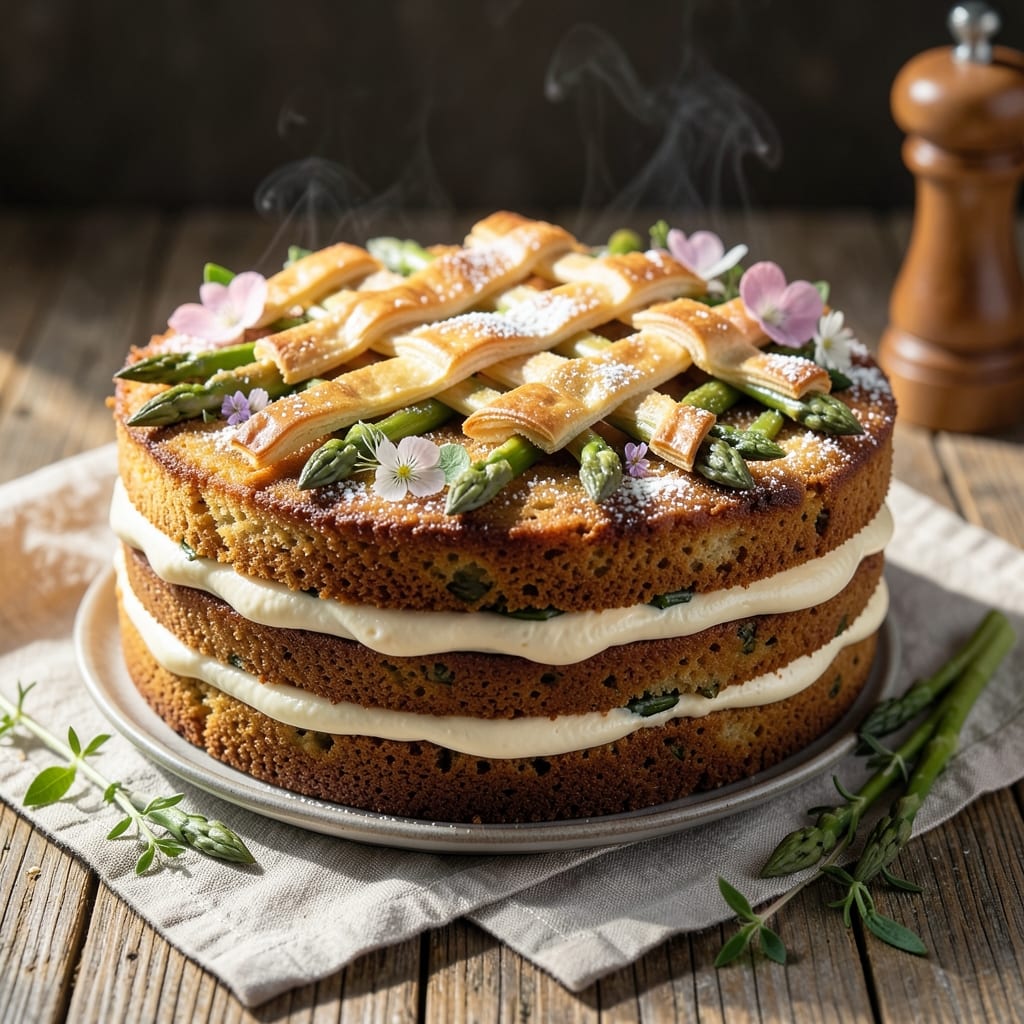
This asparagus cake recipe transforms humble spring vegetables into a moist, vibrant dessert that balances earthy asparagus with delicate vanilla sweetness. The secret lies in finely chopping the asparagus stems—discarded in most recipes—and blending them into the batter, creating subtle green layers that surprise and delight. Perfect for spring celebrations or when you want to use seasonal produce in unexpected ways.
What makes this cake truly special is its two-stage baking process: a quick pre-bake for the asparagus-infused batter, followed by a final bake with vanilla layers. This technique ensures the asparagus flavor integrates beautifully without overpowering the sweetness, while the cake remains tender and lightly crumbly. The result is a dessert that looks elegant but requires no special skills.
By the time it emerges from the oven, you'll have a cake with distinct green layers visible through the vanilla frosting, offering a visual and flavorful contrast. The asparagus adds a subtle earthiness that pairs wonderfully with whipped cream or a fresh berry compote. It's the kind of dessert that sparks conversation at the table.
This recipe works beautifully for vegetarian diets and can be adapted with egg substitutes or dairy-free butter for those with dietary restrictions. The versatility makes it perfect for brunch gatherings, spring luncheons, or even as a unique after-dinner treat. Let's get baking!
Ingredients for asparagus cake
Earthy asparagus meets delicate vanilla in this springtime masterpiece, requiring only twelve thoughtful ingredients.
| Ingredient | Amount | Notes |
|---|---|---|
| Fresh Asparagus Spears 🌱 | 1 ½ lb | Tops trimmed, stems finely chopped |
| All-Purpose Flour 🌾 | 2 cups | Sifted for light texture |
| Granulated Sugar 🍚 | 1 ½ cups | Superfine preferred for smoothness |
| Unsalted Butter 🧈 | 1 cup | Cold, cubed for creaming |
| Large Eggs 🥚 | 4 whole | Room temperature for blending |
| Pure Vanilla Extract 🌿 | 2 tsp | High-quality Madagascar preferred |
| Baking Powder 🧂 | 2 tsp | Diamond Crystal preferred |
| Salt 🧂 | ½ tsp | Fine sea salt preferred |
| Vanilla Bean Paste 🌸 | 1 tbsp | For visible speckles |
| Heavy Whipping Cream 🥛 | 2 cups | Cold for frosting |
| Powdered Sugar 🍚 | 2 cups | For smooth frosting |
| Lemon Zest 🍋 | 1 tsp | Brightens asparagus flavor |
The asparagus is the heart of this cake, so choose firm, bright green spears with tightly closed tips—avoid woody or yellowing stalks. Trim the tough ends carefully, then reserve the stems for the batter while using the tips for garnish if desired. Whole Foods or local farmers markets often carry the freshest spring asparagus, but standard grocery stores work too. For the flour, King Arthur or Gold Medal brands yield the lightest texture when sifted. The vanilla extract should be pure, with no alcohol listed as the first ingredient—Madagascar Bourbon offers the deepest flavor profile.
No vanilla bean paste? Pure vanilla extract plus a pinch of turmeric mimics the speckled look, though the flavor won't be identical. The baking powder must be fresh—if your container is over a year old, test it in a small batch of batter to confirm it still bubbles. For a dairy-free adaptation, Earth Balance vegan butter works well, though the texture may be slightly denser. The heavy whipping cream should be cold straight from the fridge—let it sit out for 10 minutes before whipping to achieve perfect peaks. If you're short on time, powdered sugar mixed with 1 tsp corn syrup can stabilize the frosting, though purists will notice the difference.
Store the cake in an airtight container at room temperature for up to 3 days, though it's best enjoyed within 24 hours for optimal moisture. The vanilla layers can be prepped a day ahead and refrigerated, then baked just before serving. Freeze the unfrosted cake layers for up to 1 month—thaw overnight in the fridge before assembling. The frosting should be made fresh day-of, as it softens slightly at room temperature. For presentation, dust with powdered sugar or edible gold leaf to highlight the green layers.
Why You'll Love This Recipe
- No Chopping Needed: I swear by this trick—just trim the asparagus ends and slice them into thick rounds. No peeling, no fuss, and you’re done in minutes. The spears hold their shape while baking, so they’re still crisp-tender, not mushy.
- Sweet-Savory Magic: That buttery egg batter soaks up the asparagus’s natural grassy notes while the sugar caramelizes just enough to balance it. Honestly, it’s the kind of dish where you forget it’s "healthy"—until you realize you’re eating veggies for dinner.
- Lunchbox Hero: Between us, this cake reheats beautifully for packed lunches. Slice it into squares, wrap in foil, and toss it in a bag. My kids used to complain about veggies—now they ask for seconds.
- Pantry Staple Power: Flour, sugar, butter, eggs—you’re probably already stocked. Asparagus is the only thing you might need to grab, and it’s cheaper than takeout. Plus, leftovers keep for days without drying out.
Step-by-step instructions for earthy green asparagus cake
Transform fresh asparagus into a moist, vibrant cake with these precise techniques.
Prepare the Asparagus Base
Preheat your oven to 350°F and line two 9-inch round cake pans with parchment paper. Trim the tough ends from the 1.5 lb fresh asparagus spears, reserving the tender tops for garnish. Finely chop the stems into small pieces—you should have about 2 cups of chopped asparagus.
Steam the chopped asparagus in a colander over boiling water for 3-4 minutes until tender but still vibrant green. Drain thoroughly and let cool completely before mixing. This steaming process preserves the asparagus's natural flavor while removing excess moisture that could make your cake dense.
Cream Butter and Sugar
In a stand mixer fitted with the paddle attachment, beat the 1 cup unsalted butter (cold and cubed) with the 1.5 cups granulated sugar on medium speed for 3-4 minutes. The mixture should become light and fluffy, nearly doubling in volume, with ribbons forming when the paddle is lifted. This creaming step incorporates air, which creates the cake's tender crumb.
Add the 4 whole large eggs (room temperature) one at a time, mixing on low speed after each addition until fully incorporated. Scrape down the sides of the bowl as needed. The eggs should blend smoothly without breaking the butter emulsion. Add the 2 tsp pure vanilla extract and 1 tbsp vanilla bean paste, mixing until just combined.
Combine Dry Ingredients and Fold in Asparagus
In a separate bowl, whisk together the 2 cups all-purpose flour, 2 tsp baking powder, 0.5 tsp salt, and 1 tsp lemon zest. Sift the mixture directly into the wet ingredients and mix on low speed for 20-30 seconds until just combined—you should still see small flour streaks. Overmixing develops gluten, which can make the cake tough.
Gently fold in the cooled, chopped asparagus using a silicone spatula until evenly distributed. The batter will be slightly thicker than typical cake batter due to the asparagus. Divide the batter evenly between the prepared cake pans and smooth the tops. Bake for 35-40 minutes or until a toothpick inserted into the center comes out clean.
Prepare the Vanilla Cream Frosting
While the cakes cool, prepare the frosting by whipping the 2 cups heavy whipping cream (cold) in a chilled bowl until soft peaks form. Gradually add the 2 cups powdered sugar and continue whipping until stiff peaks form and the mixture is light and fluffy. This frosting should hold its shape when spooned but still be spreadable.
For extra flavor, fold in an additional 1 tsp vanilla extract and a pinch of salt to enhance the sweetness. The frosting should be smooth and glossy, ready to create elegant swirls between the cake layers.
Assemble and Decorate
Once the cakes have cooled completely, level the tops if necessary. Place one cake layer on a serving plate and spread a generous layer of the vanilla cream frosting. Top with the second cake layer and press gently. Frost the entire cake, then use a spatula to create decorative swirls on the sides.
Garnish the top with reserved asparagus spears arranged in a circular pattern for visual appeal. The contrast between the earthy green asparagus and the creamy frosting creates a striking presentation. Serve immediately or refrigerate for up to 2 hours before serving for the best texture and flavor.
Pro Tips For Making Asparagus Cake
- Trim the Tough Ends Right: Snap off the woody bottoms of the asparagus spears with a clean break—don’t cut them. If you’re using thicker stalks (over ½ inch), peel the lower third with a vegetable peeler first. I learned this the hard way when my cake turned gritty because I missed a stubborn tough patch.
- Bake Until Golden, Not Dry: Pull the cake out when the top springs back when pressed and the edges are just pulling away from the pan. Overbaking turns the asparagus cake dense and dry—trust the toothpick test, but don’t wait for it to come out completely clean. The asparagus flavor fades if you push it too far.
- Whisk Eggs Until Ribbon Stage: Beat the eggs with the sugar until the mixture forms a thick ribbon when the whisk is lifted. This ensures a lighter texture, not a dense one. I used to skip this, and my cake always came out heavy—like a sad, soggy pancake instead of a tender cake.
- Sift the Flour Twice: Sift the flour before mixing it with the wet ingredients, then sift it again after combining everything. This prevents lumps and guarantees a smoother batter. Yes, it’s extra work, but your cake’s crumb will be noticeably better—no one wants a floury surprise in every bite.
Essential equipment for asparagus cake
Must-Have Mixing Tools
Start with a stand mixer like the KitchenAid Artisan Series—its powerful motor handles the heavy creaming of butter and sugar without overheating. The paddle attachment is essential for blending the dense asparagus batter smoothly. For smaller batches, a hand mixer works, but you'll need to mix in shorter bursts to avoid splattering. 💡
Precision Baking Gear
Use 9-inch round cake pans with removable bottoms (like Wilton Perfect Results) for even baking and easy release. Line them with parchment paper to prevent sticking—this is especially important with asparagus-infused batter, which can be slightly sticky. A cake tester (or clean toothpick) is non-negotiable for checking doneness.
Frosting Essentials
For the vanilla cream frosting, a chilled metal bowl and whisk (or hand mixer) are critical. Cold tools prevent the cream from melting too quickly. I recommend Nordic Ware bowls—they stay cold longer and are dishwasher-safe. A spatula with a flexible edge helps create those elegant swirls without tearing the cake layers.
Optional Upgrades
Invest in a mandoline slicer (like OXO Good Grips) to level cake layers perfectly if your knife skills aren't sharp. For presentation, edible gold leaf or a stencil set adds professional flair. A digital thermometer ensures your oven is at the exact 350°F—critical for even baking with asparagus's moisture content.
Budget-Friendly Swaps
No stand mixer? A large mixing bowl and strong arm work—just mix in 30-second intervals to avoid fatigue. Use store-bought powdered sugar (like Domino) instead of sifting your own. For asparagus prep, a sharp chef's knife and cutting board suffice—no fancy gadgets needed. The key is patience, not expensive tools.
Nutrition facts
Frequently asked questions
Why does this recipe use asparagus stems?
Most recipes waste the fibrous stems, but they're packed with flavor! Finely chopping them and steaming them preserves their natural taste while removing excess moisture that could make the cake dense. The stems blend seamlessly into the batter, creating subtle green layers without overpowering the vanilla sweetness.
Can I make this cake without eggs?
For a 1:1 egg substitute, use 4 tablespoons ground flaxseed mixed with 10 tablespoons warm water (let sit 5 minutes to thicken). The texture will be slightly denser but still moist. For dairy-free, replace butter with vegan butter and use coconut cream instead of heavy whipping cream for the frosting.
How do I prevent the cake from sinking in the middle?
This happens when the oven isn't hot enough or the batter is overmixed. Always preheat your oven to 350°F and use an oven thermometer to confirm accuracy. Mix dry ingredients just until combined (small flour streaks are fine) and fold in asparagus gently. Tap pans on the counter before baking to release air bubbles.
What's the best way to store leftovers?
Keep the cake in an airtight container at room temperature for up to 3 days. For longer storage, freeze the unfrosted layers (wrapped tightly) for 1 month. Thaw overnight in the fridge, then frost fresh. The frosting should be made fresh day-of as it softens when refrigerated.
Can I substitute frozen asparagus?
Fresh asparagus gives the best flavor, but if you must use frozen, thaw and drain it thoroughly first. Steam for 5-6 minutes (longer than fresh) to remove all moisture, then pat completely dry. The texture will be slightly different, but the cake will still turn out delicious with proper drying.