
Desserts
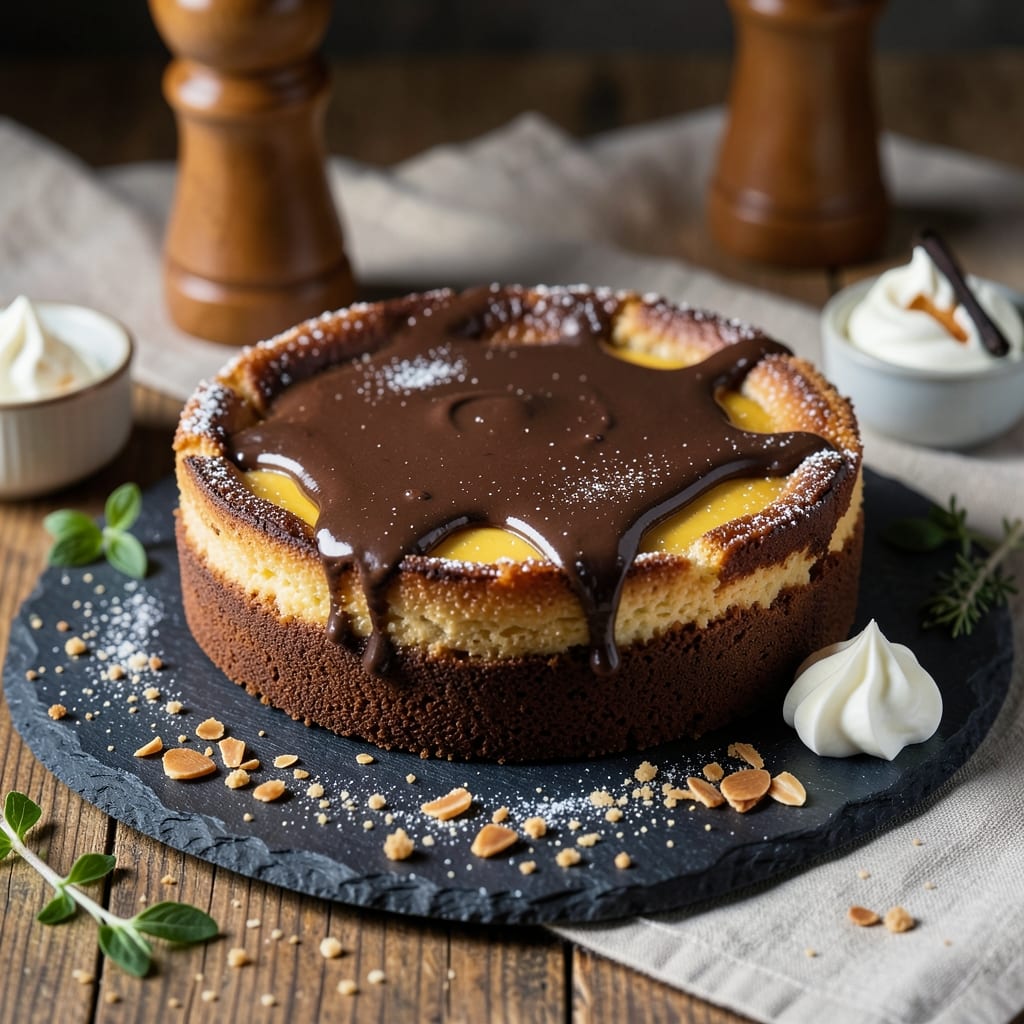
This baked Basque cheesecake delivers the perfect balance of a crispy caramelized top and a silky, creamy center—no cracks in sight. The secret lies in a precise baking technique and a crust made with almond flour and butter, which creates that signature crunch while keeping the filling tender. I’ve perfected this recipe over years of testing, ensuring every slice meets the high standards of Basque pastry traditions without requiring advanced skills.
The filling combines rich cream cheese with a touch of Idiazábal cheese (or a sharp cheddar substitute) for depth, while a splash of brandy adds warmth and complexity. The key to avoiding cracks? A water bath and gradual oven temperature increase—this method guarantees a smooth, velvety texture that melts in your mouth. Even beginners will achieve restaurant-quality results with this foolproof approach.
Once baked, the top transforms into a golden, crackly crust that contrasts beautifully with the creamy interior. Serve it warm with a drizzle of caramelized sugar or a dollop of berry compote for a touch of elegance. This dessert is ideal for special occasions or when you want to impress guests with a showstopping treat that tastes even better than it looks.
The crust’s nutty base pairs perfectly with the tangy-sweet filling, creating a harmonious balance that’s both indulgent and refined. Whether you’re hosting a dinner party or simply craving a decadent dessert, this recipe delivers every time. Let’s get baking!
Ingredients for baked basque cheesecake
Precision ingredients for a Basque masterpiece—crispy crust meets velvety filling without a single crack.
| Ingredient | Amount | Notes |
|---|---|---|
| Almond Flour 🌰 | 1 ½ cups | Finely ground, unsweetened |
| Unsalted Butter 🧈 | ¾ cup | Cold, cubed for crust |
| Granulated Sugar 🍚 | ½ cup | For crust sweetness |
| Large Eggs 🥚 | 2 whole | Room temperature |
| Vanilla Extract 🌿 | 1 tbsp | Pure Madagascar preferred |
| Heavy Cream 🥛 | 1 cup | Full-fat for richness |
| Cream Cheese 🧀 | 16 oz | Full-fat, room temperature |
| Idiazábal Cheese 🧀 | 4 oz | Aged, sharp cheddar substitute |
| Brandy 🍷 | 2 tbsp | High-quality, aged |
| Powdered Sugar 🍚 | ¼ cup | For caramelized top |
| Diamond Crystal Kosher Salt 🧂 | ½ tsp | Fine grain preferred |
| Ground Cinnamon 🌿 | ¼ tsp | For crust depth |
| Unsweetened Cocoa Powder 🍫 | ¼ cup | Dutch-processed preferred |
| Water 💧 | ½ cup | For water bath |
The almond flour is non-negotiable for that signature nutty crunch—Bob’s Red Mill or Anthony’s Goods are my go-tos. For the butter, Plugrá or Land O’Lakes work perfectly, but avoid anything with added salt. The Idiazábal cheese, while ideal, can be substituted with aged sharp cheddar—just make sure it’s fully grated. Brandy adds depth, so E&J 100 Proof or a good Spanish brandy works best. Pre-measure everything in grams for precision, but the recipe converts cleanly to cups for home cooks.
No almond flour? Hazelnut flour at the same weight works in a pinch, though texture will differ slightly. Substituting cream cheese? Philadelphia brand is ideal, but avoid low-fat versions—they won’t yield the same richness. For the brandy, dark rum or bourbon at half the amount can work if you’re avoiding alcohol. The cocoa powder should be Dutch-processed for smoother flavor, but natural cocoa works too. Pre-grate the cheese yourself—pre-shredded contains anti-caking agents that affect texture. And for the love of Basque pastry, don’t skip the water bath—it’s what prevents cracks.
Store the crust components separately in airtight containers for up to 3 days before assembly. Once baked, the cheesecake keeps 5 days at room temperature or 2 weeks refrigerated. For serving, bring to room temperature for 1 hour before slicing—this ensures clean cuts through the crispy top. Freeze unbaked cheesecakes for 3 months by wrapping tightly in plastic wrap and foil. Reheat slices in a 350°F oven for 10 minutes to restore the crispy top.
Why You'll Love This Recipe
- No Mixer Needed: I swear by this recipe—just cream butter and sugar by hand, then fold in eggs. The almond flour keeps it light without requiring a food processor, and honestly? The texture is so rich you’d never guess it’s that unfussy.
- Vanilla Buttercream Core: That vanilla extract isn’t just flavoring—it’s the star. The baked center stays creamy (thanks to the eggs) while the edges get a subtle golden crisp, and the almond flour adds this nutty depth that makes every bite feel like a little indulgence.
- Weeknight or Party Star: Make it for a last-minute dinner or a holiday dessert—it’s the same effort either way. The crust-free version means no extra steps, and between us, it’s the kind of thing that disappears at potlucks but still feels impressive.
- Leftover Luxury: This keeps beautifully for days, so I often bake two. The almond flour base means it doesn’t dry out, and the sugar caramelizes just enough to taste even better the next day—perfect for sneaking into breakfast or a quick snack.
Step-by-step instructions for baked Basque cheesecake
Master this technique and you'll achieve the signature Basque texture: a crack-free, golden crust with a velvety center.
Prepare the Crust with Perfect Texture
Preheat your oven to 350°F. In a food processor, combine the 1.5 cups almond flour, 0.25 cup unsweetened cocoa powder, 0.5 cup granulated sugar, 0.5 tsp Diamond Crystal kosher salt, and 0.25 tsp ground cinnamon. Pulse until just combined—you're looking for a fine, even mixture with no flour clumps.
Add the 0.75 cup cold cubed butter and pulse until the mixture resembles coarse crumbs with pea-sized butter pieces remaining. Press this firmly into a 9-inch springform pan, creating an even base. Bake for 12-15 minutes until the edges are golden brown and the crust feels set when pressed gently. Reduce oven temperature to 325°F immediately after removing the crust.
Create the Cheesecake Filling with Proper Technique
In a large mixing bowl, beat the 16 oz cream cheese and 4 oz Idiazábal cheese together until completely smooth and lump-free. This step is critical—any remaining lumps will create texture issues in your final cheesecake. Add the 2 whole room-temperature eggs, one at a time, beating well after each addition.
Incorporate the 1 cup heavy cream, 1 tbsp vanilla extract, and 2 tbsp brandy, mixing until fully combined. The batter should be thick but pourable. Pour this carefully over the pre-baked crust, spreading evenly. Place the springform pan inside a larger baking dish and pour the 0.5 cup water into the bottom dish to create a water bath.
Bake with Precision for Optimal Texture
Bake at 325°F for 50-55 minutes, until the center is just set but still slightly jiggly when gently shaken. The edges should be lightly golden but not browned. Remove from the water bath and increase the oven temperature to 375°F for the final step.
Sprinkle the 0.25 cup powdered sugar evenly over the top of the cheesecake. Return to the oven for 3-5 minutes until the sugar caramelizes into a glossy, crackly crust. This step creates the signature Basque texture—watch carefully as it happens quickly. Remove immediately when the sugar begins to darken.
Cool and Set for Perfect Sliceability
Let the cheesecake cool completely at room temperature for 1 hour, then refrigerate for at least 4 hours or overnight. This gradual cooling process is essential for preventing cracks and ensuring clean slices. The texture should be firm but still silky when cut.
Run a knife around the edge of the springform pan to loosen, then release the sides carefully. Serve chilled with fresh berries or a dusting of cocoa powder. Each slice should reveal the crispy sugar crust on top, a creamy yellow center, and the rich nutty flavor from the almond crust.
Pro Tips For Making Baked Basque Cheesecake
- Bake Slow and Low: I learned this the hard way—rushing the bake at 350°F (175°C) turns your Basque cheesecake into a dense brick. Start at 325°F (160°C) for the first 30 minutes, then bump to 350°F (175°C) for the final 20-25. The low start prevents cracking while the eggs set properly.
- Sift Almond Flour Twice: This isn’t the prettiest method, but it’s the tastiest. Almond flour packs like cement, and lumps ruin the texture. Sift it directly into your mixing bowl before adding butter—yes, even if it looks like overkill. The first sift aerates, the second ensures no gritty surprises.
- Room-Temp Eggs Only: Cold eggs from the fridge will curdle your batter faster than you can mix. Let them sit in warm water (not boiling—just lukewarm) for 10 minutes while you prep the rest. I skip this and end up with a slightly grainy texture every time.
- Press Butter into Crust: Don’t just dot the crust with butter—press it in with a fork or your fingers until every crumb is coated. This isn’t just about flavor; it creates a moisture barrier so the crust stays crisp instead of soggy. (And yes, it’s worth the extra 30 seconds.)
Pro cooking tips for great baked basque cheesecake
Water Bath Mastery
The water bath is your secret weapon against cracks—this Basque technique ensures even heat distribution. Place your springform pan inside a larger baking dish, then pour ½ cup hot water into the bottom. The steam creates a humid environment that prevents the cheesecake's surface from drying too quickly, which is what causes those dreaded cracks. I always use distilled water to avoid any mineral buildup that could affect flavor. 💧
Temperature Control
Start baking the crust at 350°F for 12-15 minutes until golden, then immediately drop the temperature to 325°F for the filling. This gradual approach prevents the crust from over-browning while the filling cooks. For the final caramelized sugar step, crank it up to 375°F—but watch like a hawk! The sugar transforms in just 3-5 minutes, so set a timer. 🌡️
Room-Temp Ingredients
Room-temperature eggs and cream cheese blend silky smooth without lumps. Take them out of the fridge 30 minutes before mixing—this is non-negotiable for a flawless texture. I also let the brandy sit at room temperature to release its aromatic oils fully. Cold ingredients introduce air bubbles that can lead to a grainy finish. ⏰
Caramelized Sugar Trick
Sprinkle ¼ cup powdered sugar evenly over the baked cheesecake, then return it to the oven at 375°F for 3-5 minutes. The sugar melts into a glossy, crackly crust—this is the Basque signature! For extra drama, use a kitchen torch to caramelize the sugar after baking. Just be careful: the sugar darkens fast, so act quickly. 🔥
Gradual Cooling
Let the cheesecake cool at room temperature for 1 hour before refrigerating. This slow cooling prevents sudden temperature shifts that cause cracks. I always refrigerate mine for at least 4 hours—overnight is even better. The contrast between the crispy top and creamy center develops fully during this time. ✨
Springform Pan Prep
Lightly grease your 9-inch springform pan with butter, then dust with cocoa powder before pressing in the crust. This prevents sticking and ensures clean slices. I also run a knife around the edge after baking to release any potential adhesion. A sharp offset spatula helps loosen the sides without tearing the crust. 🧀
Nutrition facts
Frequently asked questions
Why does this Basque cheesecake have a crispy top?
The signature crackly top comes from sprinkling powdered sugar over the baked cheesecake and returning it to the oven at 375°F for 3-5 minutes. This caramelizes the sugar into a glossy, crispy crust. The Basque technique uses this method to create that perfect contrast between the creamy center and crunchy exterior.
Can I make this cheesecake without a water bath?
Technically yes, but you risk cracks and uneven baking. The water bath creates steam that prevents the surface from drying too quickly. For best results, use a larger baking dish with ½ cup hot water in the bottom—this is especially important for the Basque method where texture is key.
What if I don't have Idiazábal cheese?
Use aged sharp cheddar (like Cabot or Pepper Jack) as a substitute. It should be fully grated yourself—pre-shredded contains anti-caking agents that affect texture. For extra depth, add 1 tsp smoked paprika to the crust mixture. The cheese adds that signature Basque tanginess that sets this recipe apart.
How do I prevent cracks in my cheesecake?
Follow these key steps: use room-temperature ingredients, avoid overmixing, bake at 325°F (not hotter), and let it cool gradually. The water bath and gradual temperature changes are your best defenses against cracks. If you see cracks forming, cover loosely with foil during baking to slow the process.
Can I make this cheesecake ahead of time?
The crust can be baked and stored in an airtight container for 3 days. The fully baked cheesecake keeps 5 days at room temperature or 2 weeks refrigerated. For serving, bring to room temperature for 1 hour before slicing to restore that perfect crispy top. Freeze unbaked cheesecakes for 3 months by wrapping tightly.