
Desserts
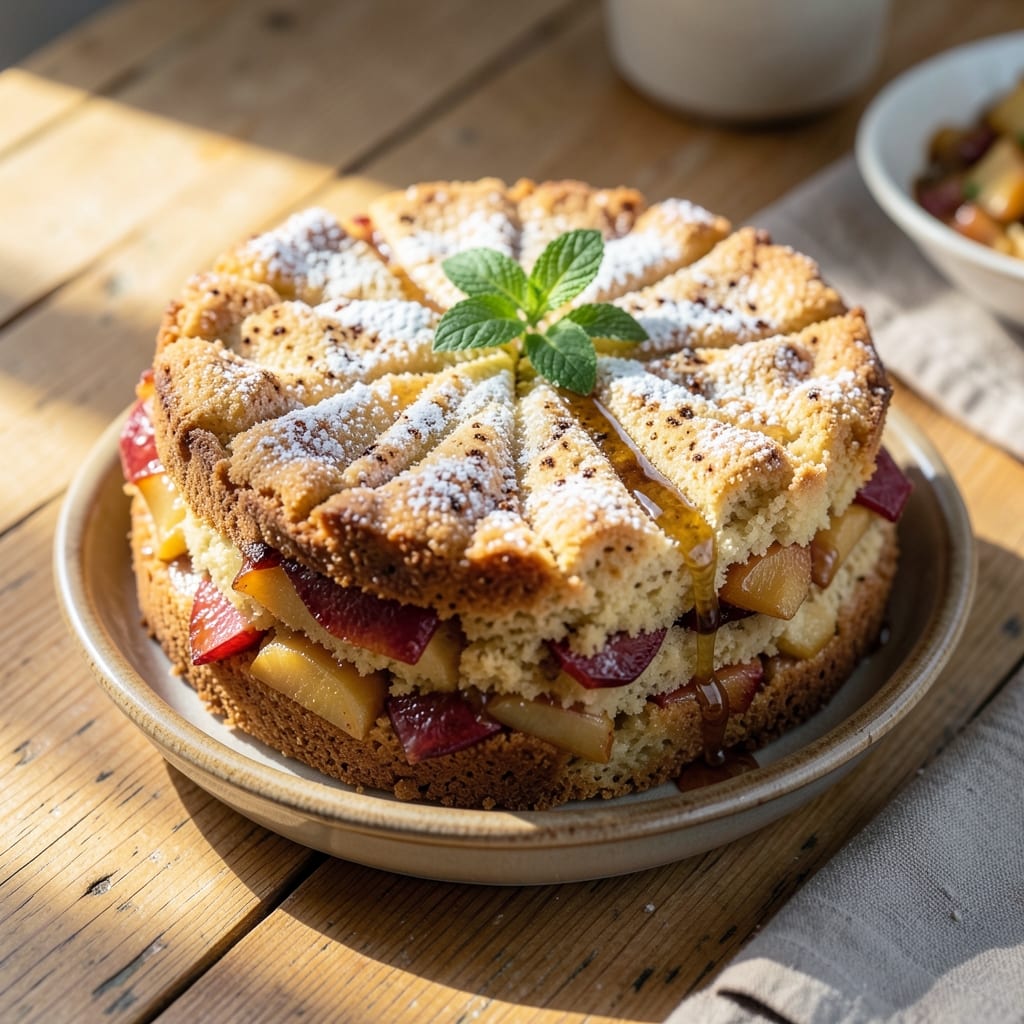
This authentic Polish apple cake recipe brings the heart of Polish home baking to your kitchen—layered with tender dough, fragrant cinnamon-spiced apples, and a cardamom twist that makes every slice unforgettable. 🌟 The secret lies in balancing traditional techniques with modern convenience, ensuring the warm, spiced flavors of Szarlotka shine without requiring hours in the kitchen.
The recipe starts with a simple yet sturdy yeast dough, rolled out and layered with a filling of tart apples (sweetened just enough to complement their natural acidity) tossed in cinnamon, vanilla, and a pinch of cardamom—a signature Polish spice that adds depth. Unlike heavier fruit cakes, this version stays light and flaky, with a golden crust that crackles just enough to hold your interest.
Baking at 350°F for 45–60 minutes transforms the dough into delicate layers, while the apples soften into a caramelized filling that clings to every bite. The result? A cake that’s rich in tradition but effortless to make, perfect for serving with coffee, tea, or a dollop of whipped cream. Whether you’re celebrating a special occasion or simply craving comfort, this recipe delivers the warmth of Polish home baking.
For those looking to modernize, a gluten-free crust option is included—because authenticity shouldn’t mean sacrificing dietary needs. Let’s get started on a dessert that tastes like nostalgia and love in every slice.
Ingredients for authentic polish apple cake
Eight ingredients for the dough, six for the spiced filling—nothing exotic, just Polish home baking essentials.
| Ingredient | Amount | Notes |
|---|---|---|
| All-Purpose Flour 🌾 | 4 cups | Plus 1 tbsp for dusting |
| Active Dry Yeast 🍞 | 2 ¼ tsp | Or 1 packet instant yeast |
| Granulated Sugar 🍚 | ½ cup | Plus 2 tbsp for dough |
| Unsalted Butter 🧈 | ¾ cup | Cold, cubed for dough |
| Large Eggs 🥚 | 1 whole | Room temperature |
| Milk 🥛 | ½ cup | Warm, not hot |
| Tart Green Apples 🍎 | 4 medium | Peeled, cored, sliced thin |
| Light Brown Sugar 🍚 | ½ cup | Packed, for filling |
| Ground Cinnamon 🌿 | 2 tsp | Plus extra for dusting |
| Vanilla Extract 🥫 | 1 tsp | Pure vanilla preferred |
| Ground Cardamom 🌿 | ¼ tsp | Freshly ground ideal |
| Salt 🧂 | ½ tsp | Diamond Crystal preferred |
| Lemon Juice 🍋 | 1 tbsp | Freshly squeezed |
| Powdered Sugar 🍚 | ¼ cup | For dusting top |
The apples are non-negotiable—Granny Smiths or Braeburns work best, but any tart variety does the trick. Local farmers markets often have perfect ones in fall, but the grocery store produce section is fine too. Look for firm, unblemished apples—they’ll hold their shape better during baking. If you’re feeling fancy, Polish markets sometimes carry Cox’s Orange Pippin, which is a traditional choice. Avoid Granny Smiths that are too green—they’re too tart and can make the cake taste bitter. Peeled, cored, and sliced thin (about 1/8-inch thick), they’ll caramelize beautifully in the oven.
No cardamom? Skip it entirely—it’s signature but not essential. The cinnamon is the star, so if you’re out, nutmeg at half the amount works in a pinch. For the dough, bread flour gives better structure, but all-purpose is what most home cooks have. The yeast matters—expired yeast won’t rise, so check the date on that packet. Warm milk (about 100°F) activates the yeast perfectly—if it’s too hot, you’ll kill it. And if you’re making the gluten-free version, almond flour plus xanthan gum replaces the wheat flour, but the texture will be denser.
This cake tastes even better the next day—cover loosely and let it cool completely on a wire rack. Store wrapped at room temperature for 3 days, or freeze the whole cake (unfrosted) for up to 3 months. I like to slice it fresh and dust with powdered sugar right before serving—that’s the magic. The apples soften as it sits, soaking up all the spiced flavors. For serving, a dollop of homemade whipped cream or a cup of Polish coffee (or even regular) takes it to the next level. Leftovers? Toss slices in the toaster for a warm breakfast treat.
Why You'll Love This Recipe
- I swear by this trick: the yeast is mixed right into the butter and sugar first—no proofing, no waiting. Just toss it with the flour, and the batter comes together faster than my coffee brews on a lazy morning.
- No Yeast Hassle: I swear by this trick: the yeast is mixed right into the butter and sugar first—no proofing, no waiting. Just toss it with the flour, and the batter comes together faster than my coffee brews on a lazy morning.
- Buttery Apple Magic: That rich butter and sugar combo soaks into the apples like a hug—tender, slightly caramelized, and still with a little bite. Honestly, the first slice makes me forget I’m not in a Polish bakery.
- Weeknight Wonder: Slice it warm for breakfast, pack it for lunch, or serve it at dinner with a dollop of cream. My kids grab it straight from the fridge, and I don’t even have to reheat it—though I do sometimes, because it’s that good.
Step-by-step instructions for warm cinnamon-spiced apple cake
Here's how to create that classic Polish apple cake with its signature cardamom twist.
🍳 Step 1: Activate the Yeast and Prepare the Dough
In a small bowl, combine the warm milk (about 105°F), 0.5 cup granulated sugar, and 2.25 tsp active dry yeast. Let it sit for 5-10 minutes until frothy—this tells you the yeast is alive and ready to work. If it doesn't bubble, start over with fresh yeast.
In a large bowl, whisk together the 4 cups all-purpose flour, 0.5 tsp salt, 2 tsp ground cinnamon, 0.25 tsp ground cardamom, and 1 tsp vanilla extract. Make a well in the center and add the yeast mixture, 1 whole large egg, and 0.75 cup cold cubed unsalted butter. Mix until a shaggy dough forms, then knead on a lightly floured surface for 8-10 minutes until smooth and elastic.
🥘 Step 2: Shape the Dough and Prepare the Apples
Place the dough in a lightly greased bowl, cover with a damp towel, and let it rise in a warm place for 1-1.5 hours or until doubled in size. Meanwhile, peel, core, and thinly slice the 4 medium tart green apples. Toss them with 0.5 cup light brown sugar, 1 tbsp lemon juice, and a pinch of ground cinnamon—this keeps them tender and adds that signature caramelized flavor.
Once the dough has risen, punch it down and divide it into three equal parts. Roll each into a 12-inch circle on a floured surface. Here's the Polish touch: brush the top of each circle with a little milk, then sprinkle with 2 tbsp granulated sugar and a pinch of ground cinnamon. This creates the signature crunchy top layer.
🔥 Step 3: Layer and Bake the Cake
Preheat your oven to 350°F. Place one dough circle on a parchment-lined baking sheet. Spread one-third of the apple mixture evenly over the dough, leaving a 1-inch border. Top with another dough circle, then repeat with the remaining apple mixture and final dough circle. Seal the edges by pinching them together.
Bake for 45-50 minutes until the top is golden brown and the cake sounds hollow when tapped. Here's the trick: if the top browns too quickly, tent it with foil after 20 minutes to prevent burning while the center cooks through. The cake should pull away slightly from the edges when done.
🍽️ Step 4: Finish and Serve
Remove the cake from the oven and let it cool for 10 minutes. Brush the warm top with a simple syrup made by dissolving 0.25 cup powdered sugar in 2 tbsp hot water. This adds a delicate sweetness that balances the spiced apples. Dust the top generously with powdered sugar while still warm for that classic Polish finish.
Slice into 8 equal wedges and serve warm with a dollop of whipped cream or a scoop of vanilla ice cream. The layers should be tender with juicy, spiced apples peeking through the flaky dough—just like the apple cakes from Polish bakeries. This cardamom twist adds a subtle warmth that makes it truly special.
Pro Tips For Making Authentic Polish Apple Cake
- Proof the Yeast Warm: Polish apple cake relies on that light, airy texture—don’t skip letting the yeast do its job. Mix the yeast with warm (not hot) water and a pinch of sugar, then wait exactly 5-7 minutes until it bubbles like a tiny champagne party. If it’s sluggish, your cake will taste dense, no matter how well you fold in the apples.
- Cut Butter Cold: Unsalted butter straight from the fridge is your friend here. Cut it into small cubes and let it sit just long enough to soften slightly—about 10 minutes at room temp—so it creams with the sugar but doesn’t turn into a greasy mess. I used to melt it, and the cake ended up greasy and heavy. (Yes, even if you’re impatient like me.)
- Don’t Overmix the Dough: Once you add the flour, stop folding after 2-3 minutes—just until the dough comes together. Overworking it develops the gluten, and your cake will turn out tough instead of tender. Polish apple cake should be soft, not chewy. Think "just combined," not "ready for a breadmaker."
- Preheat Pan with Butter: Polish apple cakes often bake in a buttered pan for that signature golden crust. Here’s the trick: after buttering, pop the pan in the oven for 2-3 minutes while preheating. The butter melts evenly, sticks better, and gives you that crisp bottom layer without burning. (Your future self will thank you.)
Troubleshooting your authentic polish apple cake
Dough Won’t Rise
If your dough fails to rise, check the yeast first—expired yeast is the most common culprit. Always use fresh yeast (test it by dissolving in warm milk; it should foam within 5-10 minutes). Another issue? Cold milk or drafts can slow fermentation. Place your dough in a warm oven (turned off with light on) for a cozy environment, or use a proofing box set to 80°F. If all else fails, try instant yeast—it activates faster and is more forgiving. 💡
Apples Too Watery
Excess moisture from apples can make your cake soggy. To fix this, pat sliced apples dry with a clean kitchen towel before tossing them in the filling. For extra insurance, toss them with 1 tbsp cornstarch or 1 tbsp all-purpose flour to absorb moisture. If you’re using very juicy apples (like Honeycrisp), reduce the sugar in the filling slightly—0.4 cup brown sugar instead of 0.5 cup—to balance the sweetness without adding more moisture. 🍎
Cake Too Dense
A dense cake often means overmixing the dough or underbaking. For the dough, mix just until combined—lumps are fine! If your cake still turns out dense, ensure you’re rolling the dough evenly (about 12-inch circles) and not pressing too hard. For baking, check the internal temperature with a thermometer—it should reach 190-200°F at the center. If you’re using gluten-free flour, expect a denser texture; compensate by whipping egg whites and folding them into the dough before baking. ✨
Top Burns Before Center Cooks
This is a classic baking dilemma, but easy to fix. Tent the cake with aluminum foil after 20 minutes to shield the top while the center finishes cooking. For extra insurance, rotate the baking sheet halfway through baking to ensure even heat distribution. If your oven runs hot, lower the temperature to 325°F for the last 10-15 minutes. A light-colored baking sheet also helps reflect heat more evenly. 🔥
Filling Too Dry
A dry filling usually means the apples lost moisture during baking. To prevent this, toss the apples with 1 tbsp lemon juice (as in the recipe) to help retain moisture. If your filling turns out dry, brush the top of the baked cake with simple syrup (dissolve 0.25 cup powdered sugar in 2 tbsp water) before dusting with powdered sugar. For extra juiciness, add 2 tbsp apple cider or 2 tbsp apple juice to the filling before assembling. 💫
Cracked Top or Uneven Layers
Cracks or uneven layers often happen when the dough isn’t rolled evenly or the apple filling isn’t spread uniformly. To fix this, weigh your dough portions (each should be about 12 oz) for consistency. When layering, leave a 1-inch border of dough around the edges to prevent gaps. If cracks appear, don’t panic—they’re common! Just brush them with a little milk or syrup after baking for a polished look. 🌟
Nutrition facts
Frequently asked questions
What's the best apple variety for this Polish apple cake?
Tart green apples like Granny Smiths or Braeburns work best—their acidity balances the sweetness perfectly. For extra authenticity, try Cox’s Orange Pippin if you can find it at specialty markets. Avoid overly sweet varieties like Gala or Fuji, as they can make the cake taste cloying.
Can I make this cake without cardamom?
The cardamom adds depth but isn't essential. If you're missing it, skip it entirely—the cinnamon will still shine. For a different twist, try ½ tsp nutmeg instead, but reduce to half the amount since it's stronger. The traditional Polish version often relies on cinnamon as the star spice.
How do I store leftovers to keep them fresh?
Let the cake cool completely, then wrap it tightly in plastic wrap or store in an airtight container. It stays fresh at room temperature for 3 days. For longer storage, freeze the whole (unfrosted) cake for up to 3 months. Thaw overnight in the fridge before serving.
Why does my dough keep sticking to the surface?
This usually happens when the dough is too dry or you're not using enough flour on your surface. Lightly flour your working area and your rolling pin, and avoid overworking the dough. If it's still sticky, let it rest for 10 minutes before rolling. The dough should be soft but not wet.
Can I make this cake gluten-free?
Yes, but the texture will be denser. Replace the all-purpose flour with a 1:1 gluten-free baking flour blend plus ½ tsp xanthan gum. For extra lift, whip the egg whites separately and fold them into the dough before baking. Expect a slightly heavier result than the traditional version.